Recipes, Stories, Traditions · 28 Maggio 2024
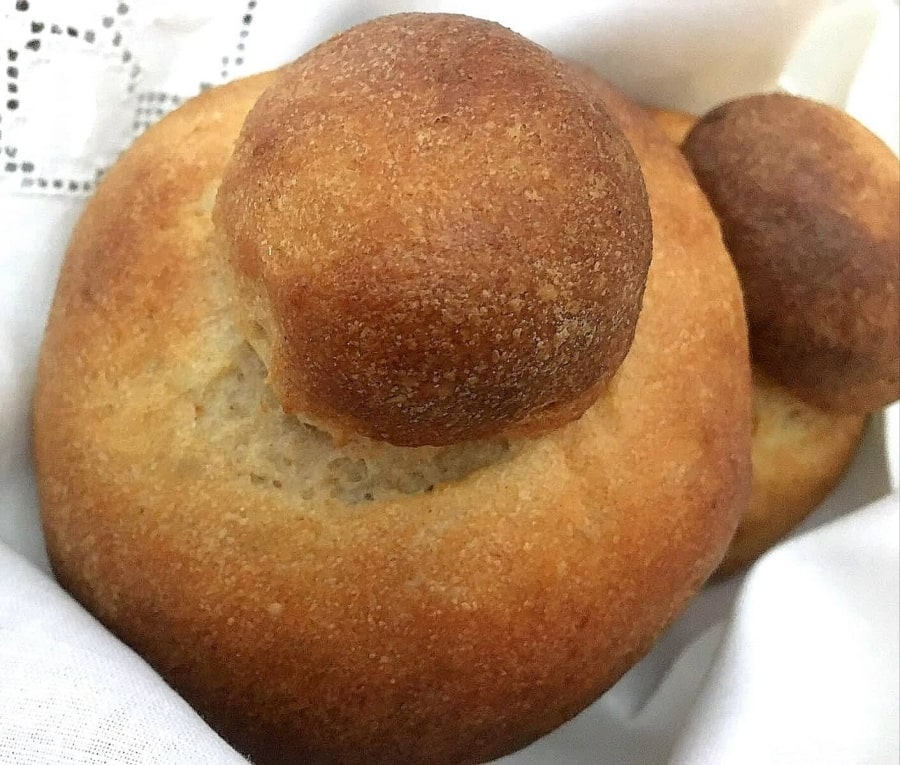
SICILIAN BRIOCHE WITH “TUPPO”
Difficulty
Prep time
Cook time
Servings
Season
Sicilian Brioche with "Tuppo"
Summer begins like this: brioscia and granita.
In truth, it never really ends, because in Sicily’s cities tourists ask for our refreshing speciality all year round. Even the French, from whom we “borrowed” it.
When I investigate the origins of brioscia, I find little of interest beyond theories that do not quite convince me. So, while waiting for an expert to enlighten me, I reconstruct my own story.
A story of cross-cultural influences, linguistic adaptations and borrowing.
The first borrowing concerns the soft, sweet dough: brioche itself, a word derived from the Norman brier, “to knead”.
In France, brioche is a small baked sweet made with flour, butter, milk and baker’s yeast.
They seem to have begun as half-spheres topped with smaller half-spheres. Later they grew larger, more structured and voluptuous, certainly in modern times with the use of strong flours.
But how did it reach Sicily and become our brioscia co tuppu?
Reading online articles reveals little firm evidence and plenty of supposition. The only historical account links it to Francesco Procopio de Coltelli, the Sicilian who brought sorbets and ice cream to Paris and founded its oldest café, Le Procope, in 1686.
The ice cream maker may have paired the local brioche with his ice creams and sorbets there, but I find no evidence that he returned to Sicily.
It seems rather unlikely to me.
I think it more likely that the sweet reached us through the Monsù, the southern Italian adaptation of the French Monsieur.
My reasoning follows both a chronological thread, the arrival of the Monsù, and a contemporary development, the spread of the term tupé.
French cooks arrived in the Kingdom of the Two Sicilies after the marriage of Maria Theresa of Austria and Ferdinand I of Bourbon in 1768.
The queen wanted to introduce the refinement of French cooking to her new kingdom.
The Monsieur chefs greatly enriched our already varied cuisine and certainly taught us their traditional brioche.
At the end of the eighteenth century, the French fashion term toupet also entered Italian: literally “tuft” or “top”, later used for a hairstyle.
While Italian retained the French pronunciation, in Sicilian it became u tuppu.
A hairstyle that became almost obligatory among Sicilian women.
Told this way, the story of Sicilian brioscia, which “borrowed” everything from France, seems smoother and more plausible.
It is now part of our food heritage.
And they have the Mona Lisa.

what’s
needed.
Metod:
Step by step
Sift the flour and place in the stand mixer bowl with the sugar.
Warm the milk very gently, to no more than 25°C, and dissolve the yeast and honey in it. Flavour with finely grated lemon zest and the seeds scraped from the vanilla pod.
Run the mixer at moderate speed and gradually pour in the milk and cinnamon liqueur.
Add one whole egg and one yolk. Reserve the remaining white in a glass, cover with cling film and refrigerate.
Once the eggs are incorporated, add the cubed butter, left at room temperature for about 10–15 minutes. Finally, add half a teaspoon of salt.
When evenly combined, transfer to a large bowl and seal well with cling film.
Leave to rise for about 12 hours. It is convenient to mix the dough in the late afternoon and bake in the morning.
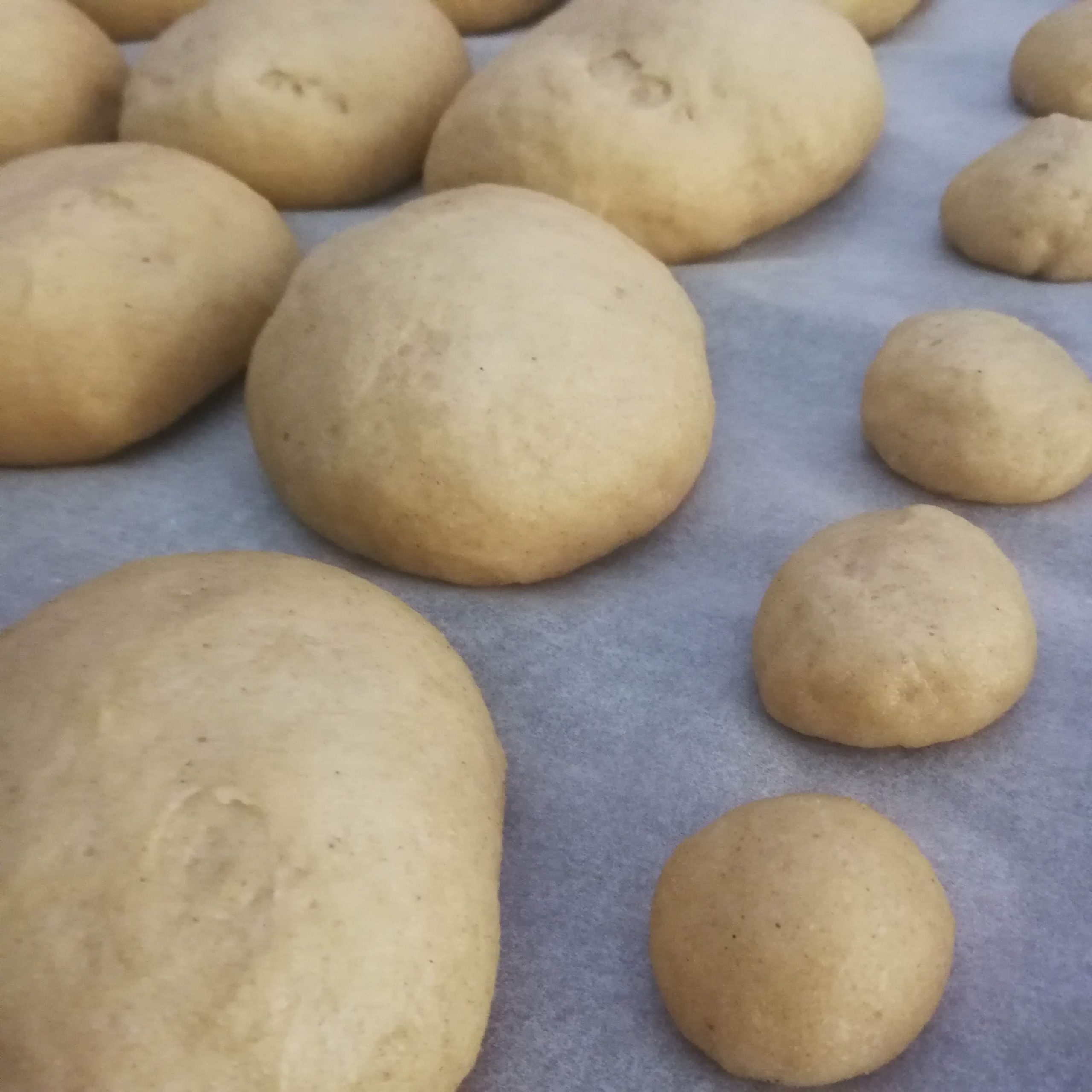
After this time, work the dough briefly by hand and shape the buns. Make round buns and a small ball for each. Place well apart on sheets of baking paper, as they should not be handled again after rising.
Cover with cling film and leave to double in volume, about 2 hours.
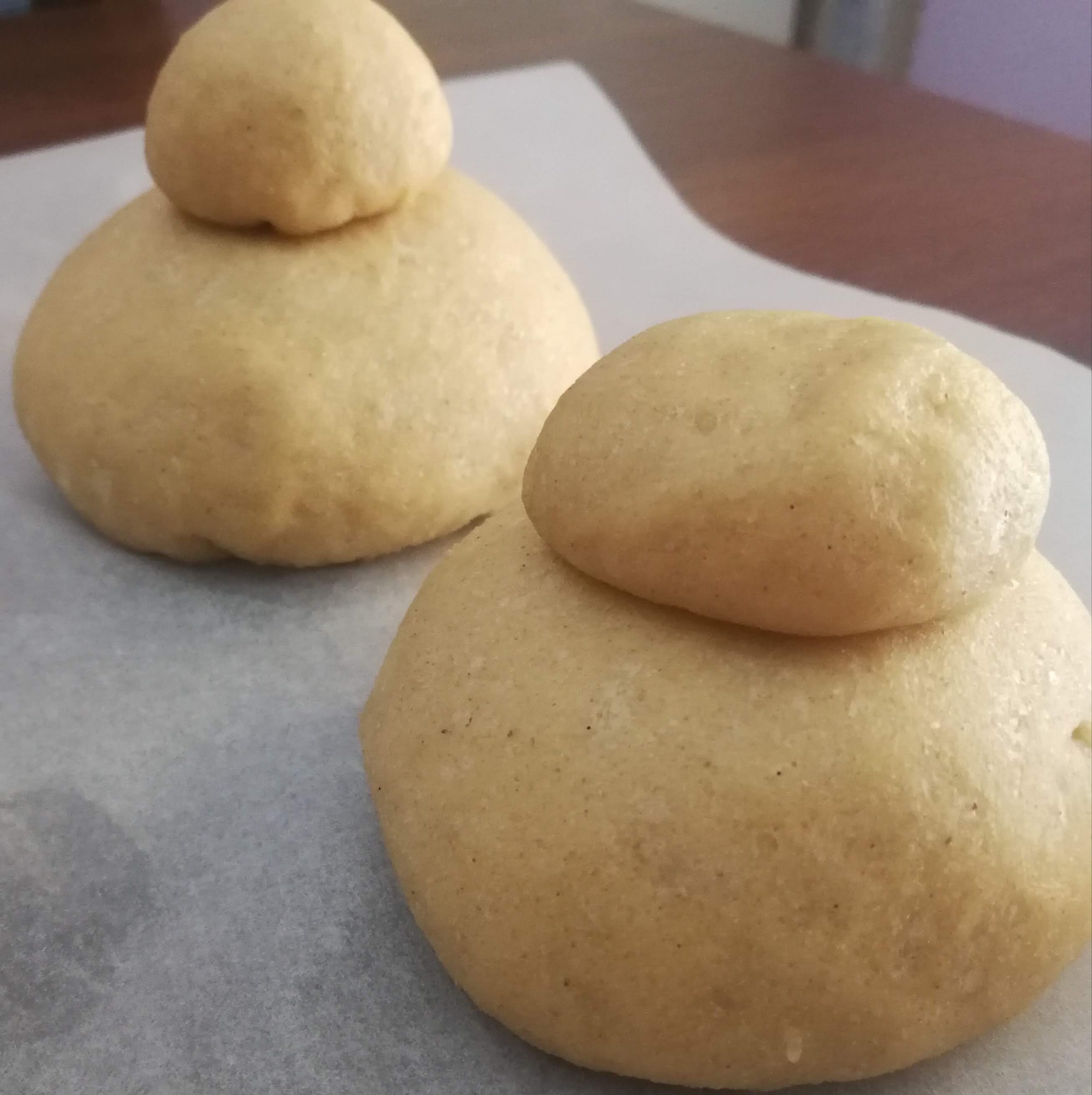
Place the smaller balls on the buns and gently brush with the reserved egg white, lightly beaten with half a tablespoon of milk.
Bake in a fan oven at 180°C for 15 minutes.
FEDERICA’S TIPS
Be patient with the rise and look for dough that has visibly doubled rather than relying only on the clock. Make a deep hollow for each little tuppo and press it gently into place so it stays attached as the brioche expands.
― storage and serving ―