Ingredients, Recipes, Traditions · 30 Gennaio 2024
CUTUMÈ: SICILIAN RICOTTA FRITTERS
Difficulty
Prep time
Cook time
Servings
Season
Cutumè: Sicilian Ricotta Fritters
Sicilian cooking is an endless source of precious sweet and savoury surprises, handed down from both the recent and distant past.
Fried sweets and ricotta.
Now that the theme is Carnival, I leaf through my beloved recipe books and can already smell sweet frying.
I stop at a page with a curious name: Cutumè.
A sheep’s milk ricotta fritter from the Sicilian food tradition of the area between Catania and Ragusa.
Sometimes the names of foods pass me by and slip away, travelling alongside my thoughts.
Then comes a moment when they appear again, almost insisting on attention. I feel both a desire and a duty to understand, try the recipe and make it my own.
That is what happened with cutumè: I had heard the name occasionally without ever paying attention, for reasons I cannot explain. I associated it with dry pastries or biscuits.
Instead, there it was in the fried sweets section of one of my cookbooks.
So far, I have found no historical sources or stories about the origins or particular occasions for eating this delicious fritter.
As usual, there are several variations: some sprinkle it with granulated sugar, others with honey, thyme honey in the Ragusa area.
The proportion of flour to ricotta also varies considerably. The common factor is that the ricotta always weighs substantially more.
As for the type of flour, only one recipe specifies Maiorca. Elsewhere it is not clear whether durum or soft wheat is used, so perhaps it is not decisive.
What is certain is that there is no raising agent, so the fritter should remain flat.
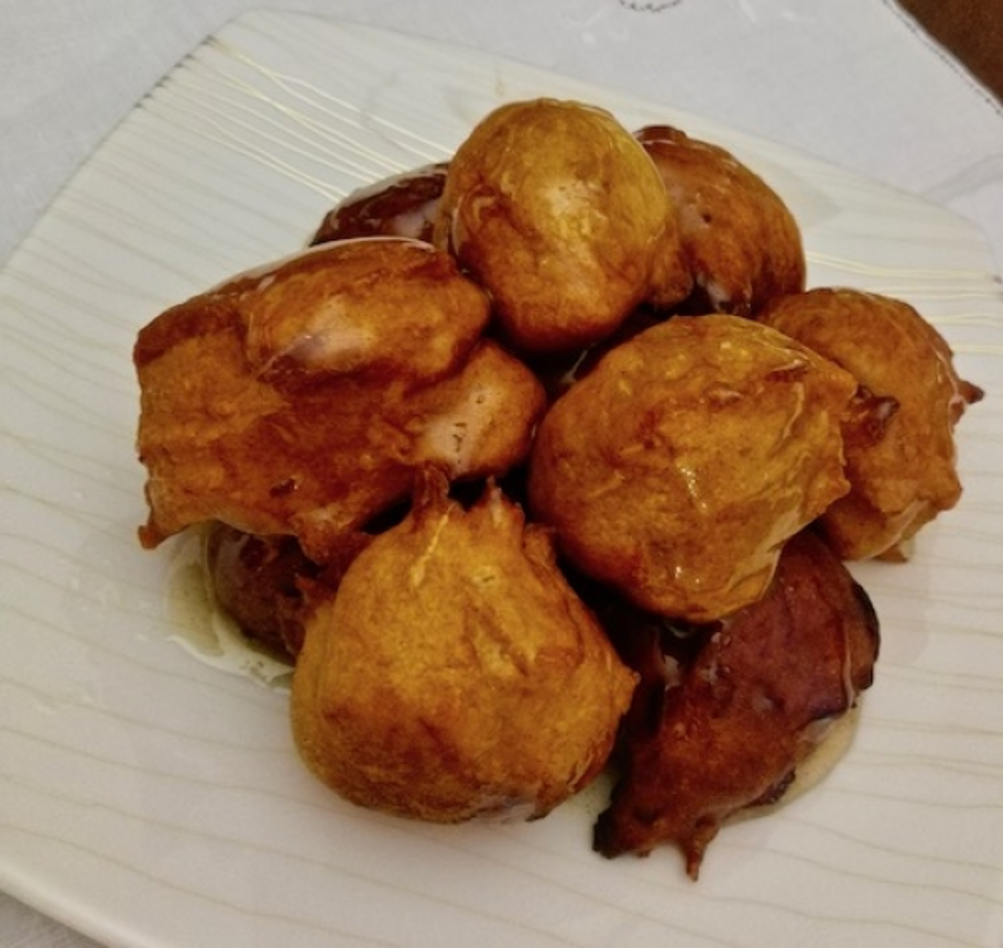
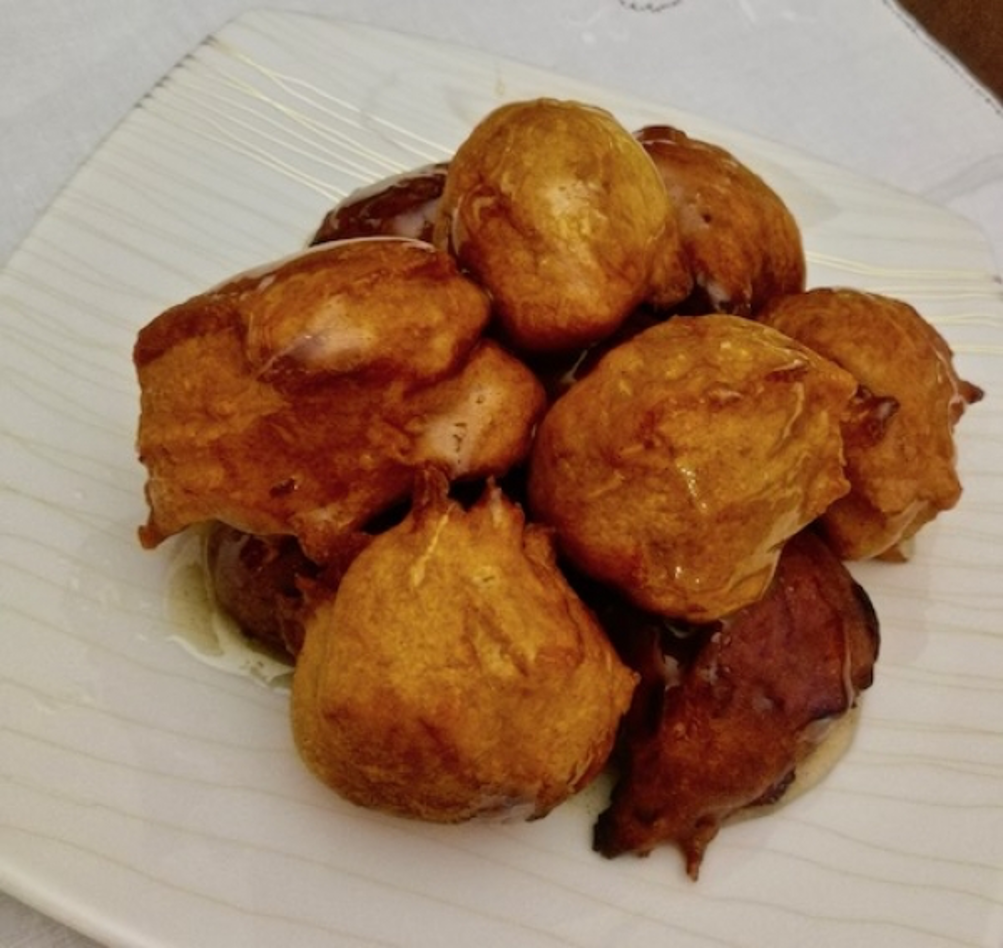
In my recipe, however, its volume tripled during cooking, making it more like a sfincia.
It is certainly delicious this way.
I used Federica Genovese Sicily & Food einkorn flour, and I think this choice deserves some of the credit.
Are you as curious as I am to try the recipe?
Let’s get to work!

what’s
needed.
Metod:
Step by step
The ricotta should have been made at least two days earlier. If it is not completely dry, the result will be affected.
First mix the flour, eggs, salt, sugar and cinnamon with a spoon. Add the gin and finally the eggs. Beat thoroughly with an electric whisk.
Pour oil into a large, deep saucepan and heat to frying temperature.
Take portions of batter with two spoons, trying to give them a round shape, and drop into the hot oil until golden.
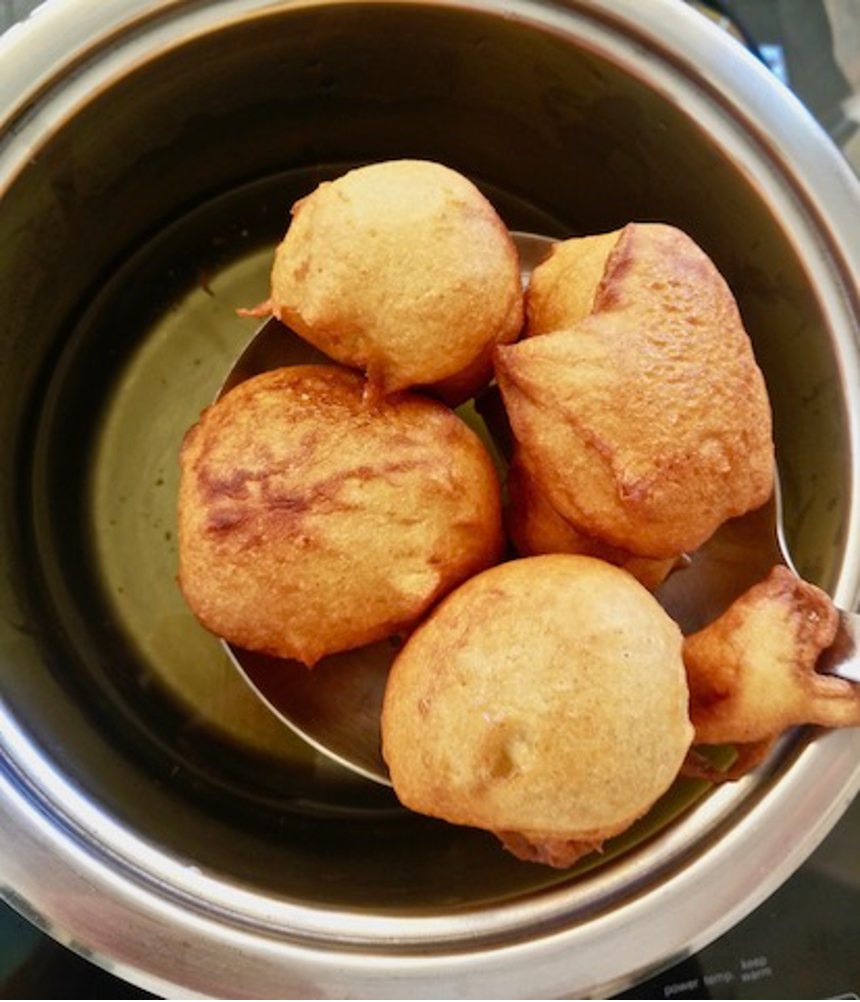
Drain on kitchen paper, arrange on a serving plate and drizzle with warm honey.
FEDERICA’S TIPS
Well-drained ricotta is the secret to a batter that holds together. Use two lightly oiled spoons to shape small, even portions, fry in batches and drizzle with warm honey just before serving.
― storage and serving ―